The Three Most Common Types of Arthritis
Arthritis is inflammation of the joints that can cause debilitating pain. Though it’s most commonly diagnosed in those over the age of 65, arthritis can also trouble children and younger adults.

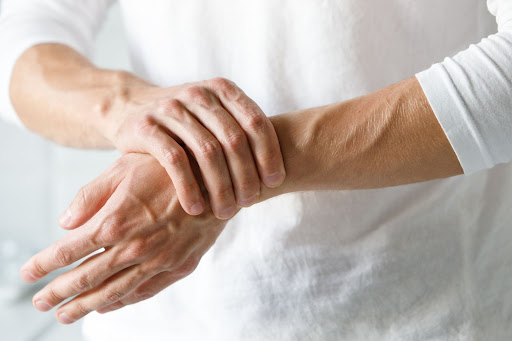
Arthritis is inflammation of the joints that can cause debilitating pain. Though it’s most commonly diagnosed in those over the age of 65, arthritis can also trouble children and younger adults.
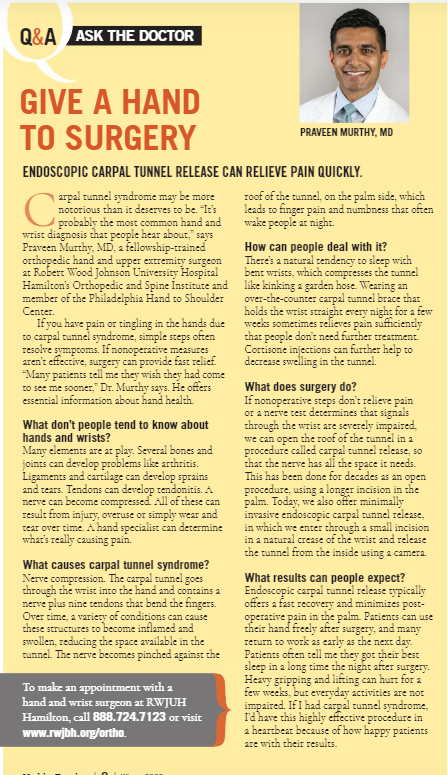
You rely on your hands to accomplish your tasks throughout the day. If you have wrist pain, you may struggle to focus on or complete the things you need to do. Shooting pain or tingling sensations in your fingers, hands, and wrists can be frustrating and scary. You may be wondering what is going on and if your wrist pain is caused by tendonitis or carpal tunnel syndrome.
Read more “Wrist Pain: Is it Tendonitis or Carpal Tunnel Syndrome?”

The human body is a complex machine with many moving parts that work in unison to get us through our daily lives. One of the most integral components of this system is our rotator cuffs. The rotator cuff consists of a large group of muscles and tendons surrounding the shoulder joint, which allows our arms to perform various actions. Injuries to the rotator cuff can result in loss of motor function and require months of ongoing rehabilitation. There are exercises that you can do to help strengthen your rotator cuff muscles and lessen the chance of injury and some exercises that, if done incorrectly, can lead to an injury. Read more “The Five Best (and Worst) Exercises for Your Rotator Cuff”
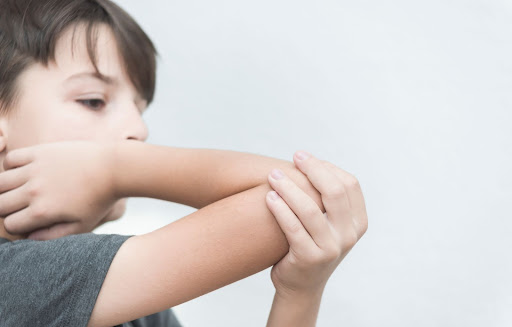
Kids care about having fun, learning, and making friends. However, pediatric arthritis causes pain and discomfort, making it challenging to even get up in the morning, let alone stay active. Unfortunately, nearly 300,000 American children have joint disease, and one-sixth of them suffer from juvenile idiopathic arthritis (JIA), according to the Arthritis National Research Foundation. Your child can receive treatment and relief for arthritis at Philadelphia Hand to Shoulder, which serves clients at 17 offices throughout Philadelphia and South Jersey.

The tingling sensation in your hands and arms that happens after you first wake up from a long nap can prove disorienting. The inability to perform even the simplest of tasks until you get full feeling back in your extremities is a minor inconvenience, but what causes the sensation? Does the fact that your arm falls asleep more frequently than others mean that there is a larger issue at play? What is the actual cause of your arm falling asleep at night, and is there any way for you to stop it from happening?
Read more “What Does It Mean When Your Hand or Arm Falls Asleep While You’re Sleeping?”

Frozen shoulder is another term used to refer to a condition called adhesive capsulitis. With this condition, the shoulder capsule (which is made up of strong connective tissue and surrounds the ball-and-socket joint of your shoulder) becomes inflamed and tightens around the shoulder joint.
Read more “Time to Thaw Out: How to Unfreeze a Frozen Shoulder”

When it comes to your hand’s bone and muscular structure, several conditions can develop over time. Each can cause varying issues and potential discomfort that may require a professional consultation. One such syndrome that can cause distress for patients that does not get as much attention is carpal boss syndrome. It may prove challenging to diagnose carpal boss syndrome, but few key indicators and treatment options are available to correct the issue.
Read more “What Is Carpal Boss Syndrome and How Is It Treated?”
From slips on the ice to mishaps with a shovel or snow blower, the physicians of Philadelphia Hand to Shoulder Center see an increase in patients with hand, wrist, arm, elbow and shoulder injuries during the winter. Luckily, there are precautions you can take to prevent these injuries. Read more “Winter Safety Tips from PHSC”
**PHSC Policies on Coronavirus (COVID-19)**
Updated January 3, 2022
The safety of our patients and staff is our number one priority. With that in mind, all patients visiting any of our offices in Pennsylvania and New Jersey, regardless of vaccination status, MUST WEAR A MASK AT ALL TIMES.
Patients Only: To allow for social distancing, guests and family members are NOT PERMITTED to attend appointments with patients. The only exceptions are:
We ask that all non-urgent patient appointments be rescheduled if you:
As a reminder, the U.S. Center for Disease Control (CDC) has issued the following recommendations for controlling and minimizing the spread of the Coronavirus:
Recent Comments